
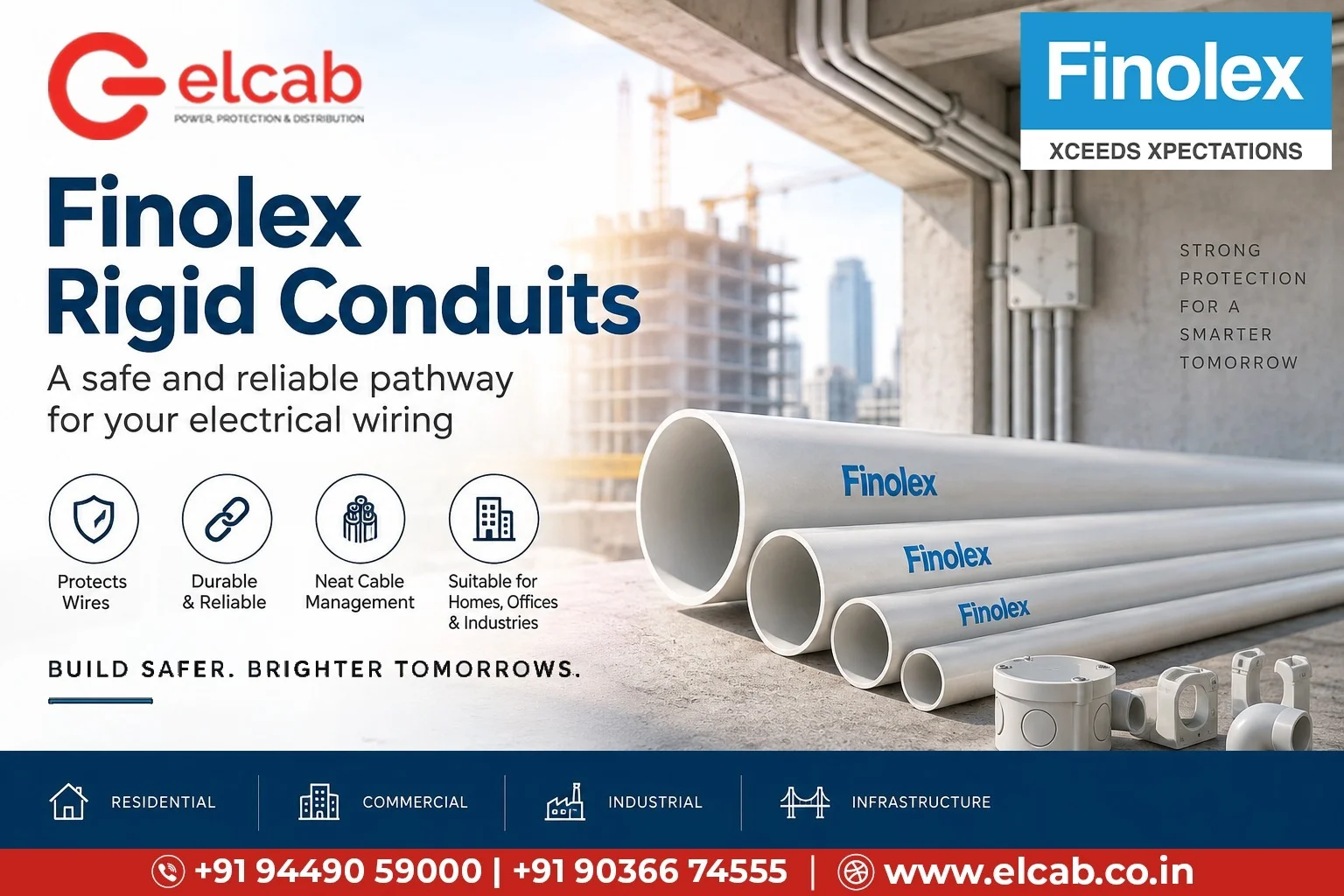
Finolex Rigid Conduits: Features, Applications and Buying Guide
When planning an electrical installation, choosing the right wires and cables is only one part of the job. They also need proper protection and a well-planned route. This is where Finolex Rigid Conduits can be useful.
Rigid conduits provide a defined pathway for electrical wires and help protect them from physical damage. They are commonly considered for residential buildings, commercial properties, industrial facilities, and other electrical installations where wiring needs to be properly routed and protected.
For contractors, builders, electricians, and project purchasers, selecting the right conduit is important because the conduit has to work well with the wiring, installation method, and surrounding environment.
At Elcab, we supply electrical products for different types of projects. If you are looking for Finolex Rigid Conduits, understanding their applications, selection factors, and installation requirements can help you make a more informed purchase.
What Are Finolex Rigid Conduits?
A rigid conduit is a firm protective tube used to route electrical wires and cables. Unlike flexible conduits, it does not easily change shape after installation, which makes it suitable for fixed and planned wiring routes.
Finolex Rigid Conduits can be used to keep electrical wiring organised while providing an additional layer of protection. Depending on the project, they may be installed through walls, ceilings, or along suitable surface routes.
The right conduit should always be selected based on the type of wiring, number of cables, installation location, conduit size, and relevant electrical requirements.
Why Are Rigid Conduits Used in Electrical Installations?
Electrical wires may be exposed to physical impact, movement, dust, moisture, and other conditions depending on where they are installed. A suitable conduit provides a protective pathway around the wiring.
There are several practical reasons for using rigid conduits:
- They help protect wires from physical damage.
- They keep wiring neatly routed.
- They make cable pathways easier to identify.
- They provide a structured installation for electrical wiring.
- They can be used in a wide range of building and electrical projects.
- They can make future wiring management easier when the installation has been properly planned.
For a professional electrical installation, the conduit and wiring should be considered together rather than selecting either product independently.
Key Features of Finolex Rigid Conduits
The exact features of a conduit depend on the particular product and its specifications. However, when choosing Finolex Rigid Conduits, there are several characteristics that buyers generally look for.
Rigid and Stable Construction
The main advantage of a rigid conduit is its firm construction. It maintains a defined route after installation, making it suitable for fixed wiring pathways.
Protection for Electrical Wires
The conduit surrounds the wires and provides additional protection against physical contact and mechanical damage. This is particularly useful where wiring needs to pass through building structures or designated electrical routes.
Neat Cable Management
Instead of having wires running loosely along different routes, a conduit system allows them to be arranged through planned pathways. This can result in a cleaner and more organised electrical installation.
Different Installation Possibilities
Rigid conduits can be incorporated into different types of electrical installations. The appropriate product should be selected according to whether the wiring is concealed, surface-mounted, or installed in another suitable arrangement.
Suitable for Multiple Applications
Depending on the product specifications, rigid conduits can be used across residential, commercial, industrial, and infrastructure projects.
Where Are Finolex Rigid Conduits Used?
The application of a conduit depends on its specifications and the requirements of the project. Some common areas where rigid conduits may be considered include:
Residential Wiring
Homes, apartments, villas, and other residential buildings require wiring for lighting, sockets, appliances, and other electrical systems. Rigid conduits can provide organised routes for this wiring.
They can be particularly useful when electrical wiring is planned through walls, ceilings, and other fixed sections of a building.
Commercial Buildings
Offices, shops, hotels, schools, hospitals, and other commercial buildings often have several electrical circuits running through the property.
Using suitable conduit systems can help keep these wiring routes organised and provide protection to the installed cables.
Industrial Projects
Industrial facilities can have extensive electrical requirements, including power distribution, machinery connections, control systems, and other equipment.
In these environments, conduit selection needs to take the installation conditions and electrical design into account. Suitable rigid conduits can form part of the overall wiring system.
Infrastructure and Construction Projects
Large construction and infrastructure projects require careful planning of electrical routes. Conduits can be used as part of the electrical installation wherever their specifications are appropriate for the project.
How to Choose the Right Finolex Rigid Conduit
Choosing a conduit is not simply a matter of picking the cheapest or largest available option. The conduit needs to match the wiring and the installation.
Here are some factors worth considering before you buy.
1. Number of Wires
Start by determining how many wires or cables need to pass through the conduit. There should be adequate space for the intended wiring arrangement.
2. Wire Size
The dimensions of the wires also matter. A conduit that is too small can make pulling and arranging the wires unnecessarily difficult.
3. Installation Method
Consider where the conduit will be installed. A concealed installation may have different requirements from a surface-mounted wiring system.
4. Wiring Route
Look at the complete route before selecting the conduit. The number of bends, junctions, and changes in direction can affect installation.
5. Project Requirements
For larger projects, the conduit should be selected according to the electrical drawings, project specifications, applicable standards, and recommendations from qualified electrical professionals.
6. Product Specifications
Always check the manufacturer’s specifications before purchasing. This is especially important when conduits are being used for commercial, industrial, or large-scale projects.
Finolex Rigid Conduits vs Flexible Conduits
Rigid and flexible conduits are designed for different situations, so one is not necessarily better than the other.
A rigid conduit is firm and maintains its shape, making it useful for fixed and planned routes. A flexible conduit can bend more easily and can be useful where the wiring route requires greater flexibility.
| Feature | Rigid Conduit | Flexible Conduit |
|---|---|---|
| Construction | Firm | Flexible |
| Shape | Maintains its form | Can bend easily |
| Best suited for | Fixed wiring routes | Routes requiring flexibility |
| Cable routing | Structured | Adaptable |
| Installation | Planned routes | Areas with bends or restricted access |
The final choice should be based on the electrical design, installation environment, and product specifications.
Benefits of Using Rigid Conduits
A well-planned conduit system can make a noticeable difference to an electrical installation.
Better Protection
The conduit provides an additional protective layer around electrical wires, helping reduce the risk of physical damage.
Cleaner Installation
Wires can be routed through defined pathways instead of being left exposed or loosely arranged.
Easier Wire Identification
When wiring is organised through planned conduit routes, electricians can more easily understand the layout during maintenance or modifications.
Better Cable Management
Conduits help keep multiple wires and circuits organised, which becomes increasingly important as the size of an electrical installation increases.
Long-Term Practicality
A properly designed conduit system can make future inspection, maintenance, and wiring modifications more manageable.
Things to Keep in Mind During Installation
Choosing a good conduit is only the beginning. Proper installation is equally important.
Before installation, the wiring route should be planned carefully. Conduits should be cut and joined appropriately, and suitable fittings should be used wherever required.
Avoid unnecessary bends and make sure the selected conduit provides enough room for the intended wires. Electrical wires should also be installed carefully to avoid damaging their insulation.
For larger residential, commercial, and industrial projects, conduit installation should be carried out by qualified electrical professionals and in accordance with applicable electrical standards and project requirements.
Where to Buy Finolex Rigid Conduits?
Once you have identified the required conduit type and specifications, the next step is finding a reliable electrical supplier.
Buying from an established supplier can make it easier to verify product details, availability, quantities, and project requirements. This is particularly useful when purchasing electrical products for construction projects or bulk requirements.
At Elcab, we cater to electrical product requirements for homeowners, electricians, contractors, builders, businesses, and project purchasers. If you are looking to buy Finolex Rigid Conduits, you can contact our team with your required specifications and quantity.
Our team can help you check the available options based on your project requirements.
Why Choose Elcab for Finolex Rigid Conduits?
For electrical projects, getting the right product from a dependable supplier is just as important as selecting the right specification.
At Elcab, we understand that different customers have different requirements. A homeowner may need products for a single residential project, while contractors and builders may need larger quantities for ongoing construction work.
We can assist with product enquiries and help customers identify suitable electrical products based on their requirements.
If you are planning a new installation or need conduits for an ongoing project, share your requirements with our team to check the available Finolex Rigid Conduits.
Frequently Asked Questions
Finolex Rigid Conduits are used to provide a structured and protective pathway for electrical wires and cables. They can be considered for residential, commercial, industrial, and infrastructure applications based on the product specifications.
Rigid conduits maintain their shape and provide a fixed wiring pathway, while flexible conduits can bend more easily. The right option depends on the wiring route and installation requirements.
The conduit size should be selected based on the number and dimensions of the wires, the planned routing, bends, and applicable installation requirements. For larger projects, refer to the electrical design and project specifications.
Suitable rigid conduits can be used as part of residential electrical wiring systems. The product should be selected according to the intended installation and relevant requirements.
They can be used in commercial and industrial electrical installations when the selected product meets the requirements of the project. Large installations should be designed and installed by qualified electrical professionals.
You can contact Elcab for enquiries about Finolex Rigid Conduits, availability, and project requirements. The required product should be confirmed based on the application and specifications.
Choosing the Right Finolex Rigid Conduits
Finolex Rigid Conduits can be a practical choice when an electrical installation requires a firm and organised pathway for wires and cables. They help protect wiring, improve cable management, and create a cleaner installation across a variety of applications.
Before purchasing, consider the number and size of wires, installation location, routing requirements, and applicable specifications. Choosing the right conduit and installing it correctly can make the electrical system easier to manage both during installation and later maintenance.
If you are looking to buy Finolex Rigid Conduits, get in touch with Elcab with your project requirements, and our team can help you identify the appropriate options available.

